The Legacy and Evolution of Singapore’s Premier Hospital
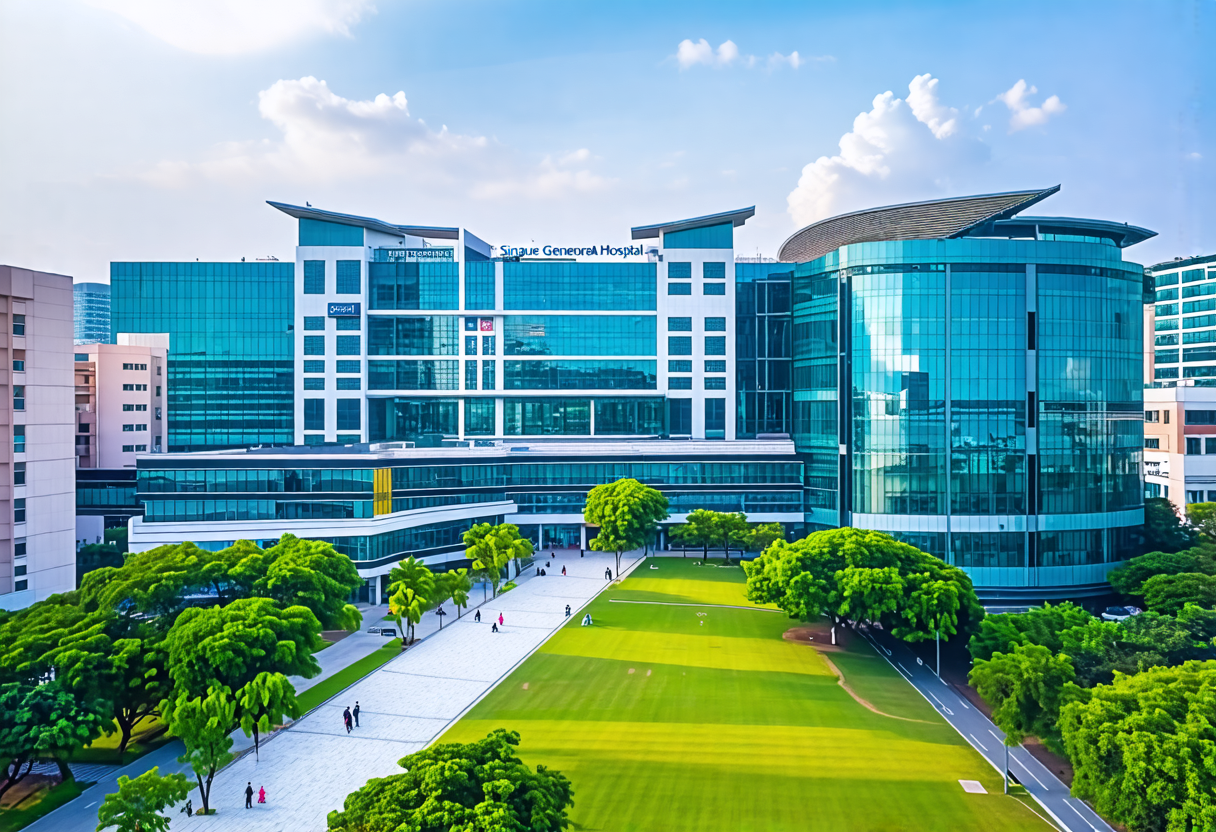
Established in 1821, Singapore General Hospital (SGH) stands as the oldest and largest acute tertiary hospital in Singapore. From its humble origins as a wooden shed for troops near the Singapore River, it has evolved into the flagship hospital of the nation’s public healthcare system and a central pillar of the SingHealth cluster. With a capacity of over 1,780 beds and a dedicated staff strength approaching 10,000, SGH serves as both a prominent academic health institute and a national tertiary referral center.
Comprehensive Medical Services and Clinical Specialties
SGH delivers holistic and multi-disciplinary care across more than 50 clinical specialties. Its medical experts work in close collaboration with allied health professionals—including dietitians, pharmacists, physiotherapists, speech therapists, and clinical psychologists—to ensure comprehensive and personalized patient management.
National Specialty Centres
The SGH campus is uniquely designed as an integrated healthcare hub, housing five distinct national specialty centres that trace their roots back to the hospital’s early medical specialisation initiatives established in the 1970s. These collaborative institutions include:
- National Cancer Centre Singapore (NCCS)
- National Dental Centre Singapore (NDCS)
- National Heart Centre Singapore (NHCS)
- National Neuroscience Institute (NNI)
- Singapore National Eye Centre (SNEC)
Specialist Centres and Departments
Beyond the national centres, SGH operates more than 25 dedicated specialist centres designed to treat complex conditions. These encompass the Centre for Assisted Reproduction (CARE), the Centre for Digestive and Liver Diseases, the Sleep Disorders unit, and the Orthopaedic Sports & Joint Centre. The hospital provides highly specialized surgical and medical interventions in diverse fields ranging from Neurosurgery, Oncology, and Renal Medicine to Plastic, Reconstructive & Aesthetic Surgery.
State-of-the-Art Facilities and Patient Experience
SGH is meticulously designed to provide a supportive, accessible, and healing environment for all patients. The sprawling 43-hectare campus features modern inpatient wards, ambulatory support services, and advanced research laboratories. The historic Bowyer Block, with its distinctive clock tower built in 1926, remains a designated national monument on the grounds.
Accessibility and Amenities
To enhance the patient and visitor experience, the hospital provides wheelchair shuttle services and officially permits guide dogs for visually impaired patients. The campus is well-connected through internal shuttle bus services and conveniently located taxi stands. Visitors, patients, and staff also have access to a wide variety of retail shops, dining areas, and automated banking facilities like ATMs and AXS machines directly within the hospital grounds.
Global Recognition and Healthcare Excellence
SGH is globally recognized for its unwavering commitment to clinical excellence, rigorous patient safety, and medical innovation. It holds the prestigious Joint Commission International (JCI) accreditation, representing the gold standard in global healthcare quality.
Rankings and Accolades
The hospital consistently ranks among the elite medical institutions worldwide. Newsweek ranked SGH as the 9th best hospital globally in 2023 and 2025, and 10th in 2026, serving as a testament to its enduring quality of care. SGH is also highly rated in the “World’s Best Smart Hospitals” category for its advanced integration of artificial intelligence, digital imaging, telemedicine, and robotics. In 2010, SGH made history by becoming the first hospital in Asia to receive the Magnet Recognition from the American Nurses Credentialing Center for exceptional nursing excellence.
Pioneering Medical Milestones
Over the decades, SGH has spearheaded numerous groundbreaking medical milestones in Southeast Asia. Notable historical achievements include performing Singapore’s first renal transplant in 1970, the first heart transplant in 1990, and pioneering the world’s first successful stem cell transplant utilizing unrelated cord blood for a patient with Thalassaemia Major in 2001.